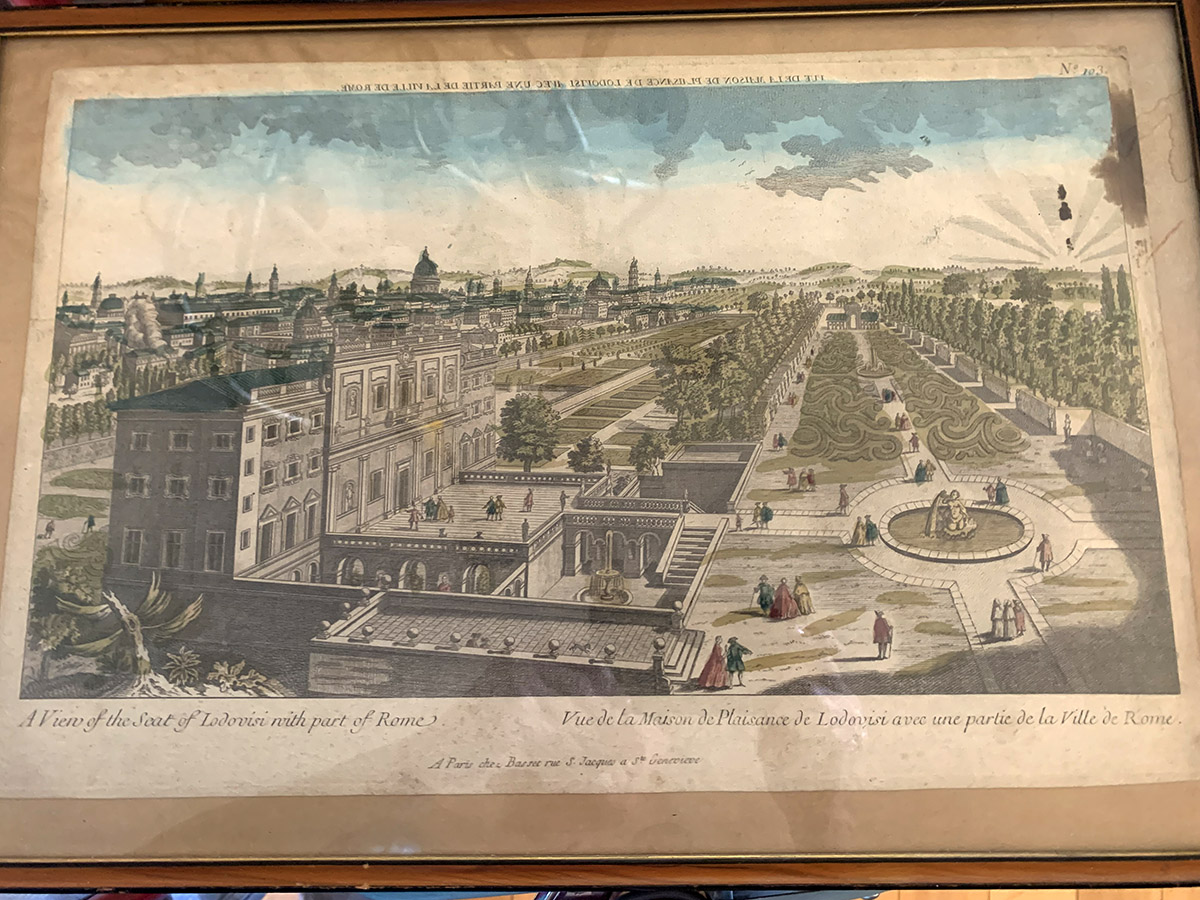
 The concept of interactive media is familiar. We interact with our phones visually. The concept of a picture in three dimensions is ordinary, mundane, part of our visual vocabulary. However, before the mid-18th century a two-dimensional work on paper only exhibited depth through human-applied artistic techniques such as perspective, shadowing, diminishing colors. These learned techniques carried over from the Renaissance.
The way we saw the world changed in the mid-18th century. People fell in love with optics, the concept of sight, and optical marvels. Also in the 18th century we fell in love with the wonders of geography, a new world with strange continents many never saw before.
The Zograscope Presented A Vision
Thus the 18th century fell in love with a special invention, interactive media called the zograscope. Like your phone, the zograscope became a way to experience sights you never saw before and to see in 3D. As if you stuck a finger in that two-dimensional picture plane, and touched the back of, say, a forest sky or the shoreline. This invention, and subsequent prints made for it, created one of the earliest forms of interactive visual media, marrying science and art. The zograscope became an 18th-century predecessor to the way we now use technology to enter a visual world.
John Dee, alchemist and hustler of the 16th–17th century, understood the potential of the double convex lens in optics. It took enterprising printers till the mid-18th century to develop a technique to truly “fool the eye” with the aid of the zograscope. The machine held a mounted doubled convex lens on a mahogany stand, positioned vertically in front of a mirror at a forty-five-degree angle. The print sat on a table. The viewer peeped through the lens into the mirror, which reflected the print. This reversed the image and flattened the eye’s natural depth perception. Note all writing is reversed in these prints. Viewers saw a dramatic, almost graspable, touchable 3D scene.
Mid-18th century collectors bought prints similar to those sent to me by FF: Vue de la Maison de Plaisance de Ludovisi avec une partie de la Ville de Rome. Vue du canal du Batiment chinois, de la Rotande, et des Jardins de Ranelagh nor jour de rejouissance, and Vue d’optique Greenwich Hospital London.
The wealthy voyeur collected in themes, stored in leather portfolios:
- The Grand Tour
- Exotic: incorrectly augmented images of the unknown
- Current Events (Wars)
- Formal Garden
Viewers experienced a wonderment, thrilled with new optics, geographical wonders, and perfection in balanced architecture. A Paris firm of artists and engravers, Andres Basset, capitalized and maneuvered through the political storm of 18th century France. They made copperplate etchings for the zograscope. The balanced architecture and symmetrical formal gardens enabled the printmakers to form the illusion of depth through receding lines. When hand-tinted, the colors lessened in hue as the view deepened.
For those who couldn’t afford a zograscope, a traveling showman with a Peep Box on his back might charge. A contrast between the wealthy collector with his portfolio, allowed the common folk a glimpse into this strange new visual world for a coin. Showmen enhanced the experience with candle-lighted areas glowing with pinpricks through the print.
The Three Prints
Of the three prints, I prefer the Public Pleasure Garden Ranelagh. It shows a 1760s Chelsea, a park only for the rich, not the public, composed of beautiful structures and gardens on the Thames. The wealthy wore fine clothes, embroideries, wigs, jewels, and walked along the promenade in one continuous loop under the Grand Rotunda, a one-hundred-fifty-foot diameter with fifty-two spectator boxes. Illuminated by fireplace and high window clerestories, and outdoors, offset by formal gardens, a fountain of mirrors, a canal, a Chinese pagoda, a Temple of Pan, accessible from the Thames. RR’s print shows the Chinese pagoda and the Rotunda, where at the age of eight Mozart played, as did the older Haydn and Handel.
Second favorite print is The Greenwich Hospital (1760s). William and Mary commissioned the Baroque architecture of Sir Christopher Wren for disabled Royal seamen (1694–1869). At the height during the Napoleonic War, seamen aged 12–99 petitioned, mainly entered at 56, full of spirit and the sealife. the Greenwich Geese seemed anything but docile.
Each of these prints are valued at $350 each.