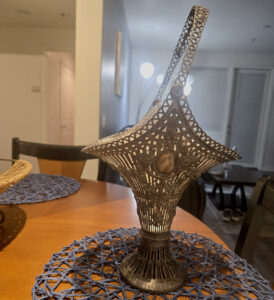
 As a kid JB admired a silver, now tarnished, handled basket with a clear glass lining. She calls it her grandmother’s German silver bride’s basket. It consists of a filigreed reticulated metal object with a fancy pierced basket handle, a flaring dramatic profile, and artistic classical style silhouettes of plaques of flowers and birds. A few fancy looking female profiles in repousse appear in the roundels too. JB emailed with me about researching the KIND of silver. I suspected sterling because of the depth of the tarnish. She thought silver plate, not finding a mark. I think she’s right, although on an intricate piece like this a hallmark becomes hard to find.
It’s NOT German Silver
Despite the name, German Silver contains NO silver. It’s sixty percent copper, twenty percent zinc, twenty percent nickel, and some lead and tin. It’s malleable like sterling, which indeed contains a silver content at .925 parts silver. But German Silver is an alloy developed in the early 19th century to RESEMBLE pricey sterling. And because German Silver doesn’t contain silver, it doesn’t tarnish.
I found many scammers wanting to sell troy ounces of German Silver online in these unstable economic times. They state that the chunk of this NON SILVER metal for sale for investment purposes is .999 percent fine. I found one set advertised for $2,000! If it’s worth $30 for an ingot I’d be surprised. Sterling silver is .925 parts silver over base metals, and coin silver .800 parts silver over base metals. Opposed to those gradations, German silver, invented by the French, then refined in Germany became a look–alike to silver. It’s still used today especially in costume jewelry. By the way, some people are allergic to the nickel content in German Silver, and shouldn’t wear it.
Silver By Any Other Name
Silver goes by different names depending on the degree of content of the inert metal in its composition. One of the Noble Metals, silver, along with gold and platinum, exhibits no chemical reactivity, is nonrustable, resists oxidation, corrosion, acid, and is valued as MONEY. It serves as currency in many world cultures, and has for eons.
The bride’s basket given as a gift as early as 1870, first appeared in fine sterling silver 1870-1880. Used for the ceremonial procession of the flower girl down the aisle, filled with petals, and treasured later as a centerpiece or cabinet ornament. JB’s dates from the later period of this bride’s basket tradition, judging from the Deco (1910-20) influence in its design. It’s not handmade but cast in silver plate, and inset with a glass liner.
Mass production led to more specialized objects for the home at the end of the 19th century and beginning of the 20th century. Brides baskets no longer came in expensive sterling, but became available to the middle class in department stores. To maintain the flashiness and the weight they were fabricated in silver plate or German Silver filled with custom glass liners. Glass manufacturers made the inserts, and metal manufacturers made the baskets, and some inserts were highly ornate and frilly. The glass could be edged, fluted, curled, flounced, colored, and painted with enameling of cupids, birds and flowers. JB’s basket sports a handle which is superfluous as her basket was used for trinkets and wedding favors.
Most Interesting Part of the Basket Story
Why the importance that such a ritual object came made of silver for over fifty years? Many cultures use gold and silver metal as currency, and any association with monetary value increases the value of the object. Bride’s baskets are always silver. Markers of cultural importance, such as a silver object, meant the gift is special, related to value, and likely expensive to purchase and maintain. A gift of a Bride’s Basket in sterling was a sacrifice. Cultures that use gold and silver currency place a high value on these metals for a few other reasons, but it’s their “richness” in perception that made them the finest tableware and gifts. Bride’s baskets didn’t have a daily use, making them even more coveted by young brides!
The value of the 1910 bride’s basket, marketed likely to a humbler bride, is $200.